
Technology in Education
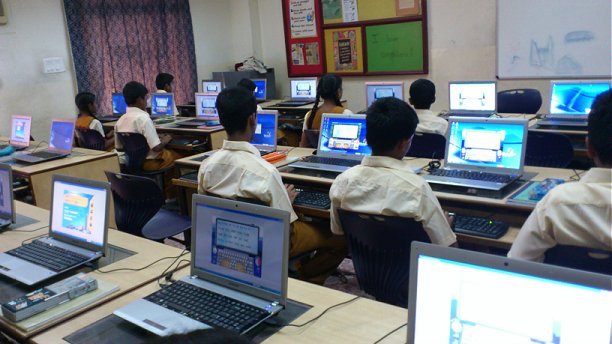
Computers open up a world of exciting and creative learning for children. Our children start using computers from UKG, for a half hour period daily. In the 1st standard classroom, there are 15 systems networked to a server, and 45 minutes a day is spent by the children on math and English CDs. In 2nd to 5th standards, computers are used for Maths, English, Science and languages, both Hindi and Tamil. An average of one and a half hours is spent on computer daily by these children. Computers are also used in art classes once a week, where they learn the basics of Corel Draw painting and design.Computer science is taught from the 5th standard onwards, including Power Point, Excel and typing skills. Primrose has more than one hundred computer systems throughout the school, as well as supervised Internet facilities for students in the library.
Films and science documentaries are also regularly screened in our projector room to the delight of our children.
Our experience so far with our initial standards has been that children
rapidly acquire the necessary skills and improve dramatically in
science and English within
six months, if computer is used as an instrument of education, under direct supervision of
the teacher. What computers can do for
children is summarized below:
1. Thinking processes:
Computer-based technologies provide support for thinking processes. Technology
provides opportunities for acquiring problem-solving skills -- either through
instructional software designed to teach problem solving or through the many requirements
for solving problems that naturally emerge when one is trying to use computer tools to
accomplish a task.
2. Self-esteem: Technology
stimulates motivation and self-esteem. Technology is the ultimate carrot for students. It
is something they want to master. Learning to use computers enhances the children’s
self-esteem and makes them excited about coming to school.
3. Preparation for future:
Technology prepares students for the future. Both higher education and the world of work
will be infused with technology in future. Schools have a responsibility to give students
the confidence and skills in using such technology that they will need after graduation.
4. Skill
development: Students gain a sense of empowerment from learning to control the
computer and to use it in ways they associate with the real world. Students, even at the
elementary school level, are able to acquire an impressive level of skill with a broad
range of computer software. They can handle more complex assignments and do more
with higher-order skills because of the supports and capabilities provided by technology.
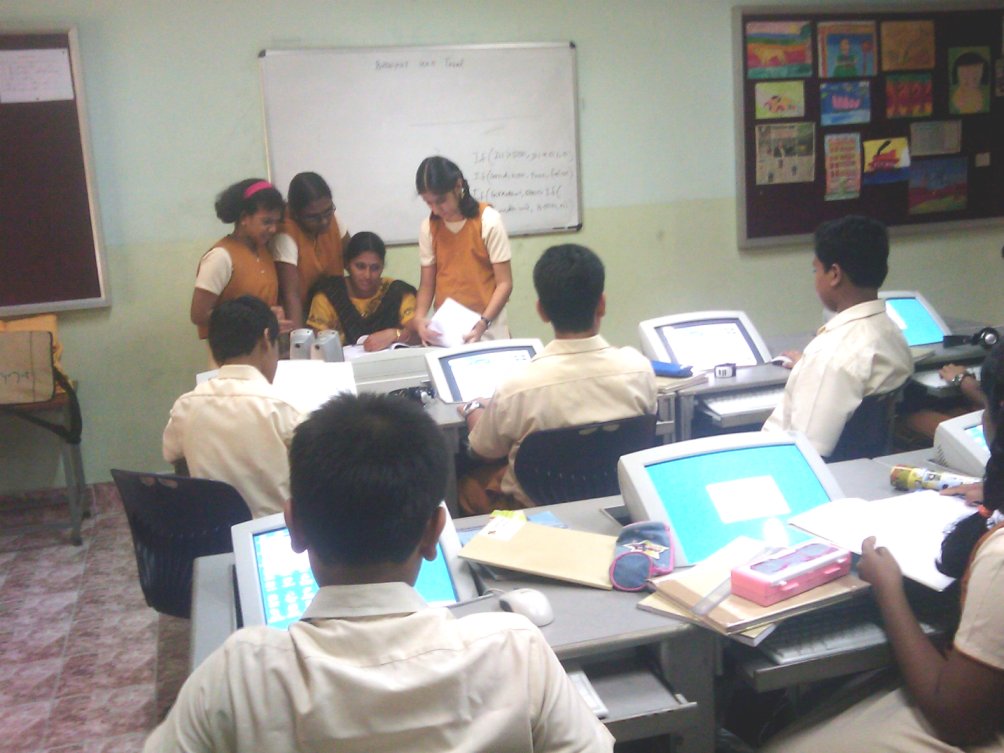
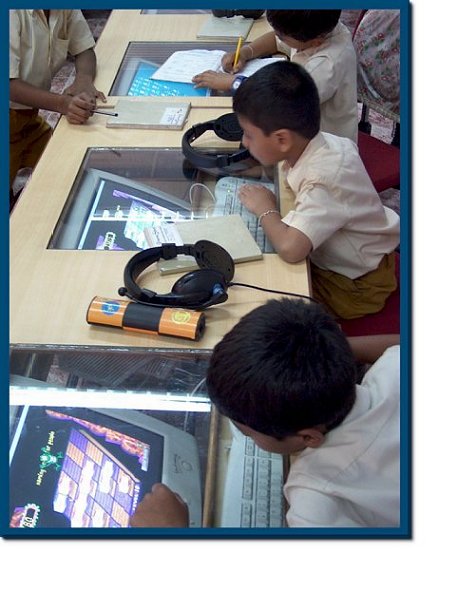
With computers, learning is an
absolute joy!
home our vision admissions academics calendar photo gallery student resources links contact us